Meetings that actually lead somewhere: 6 tips from the meeting doctor at Herr Omar
Jörgen Dyssvold, meeting doctor at Herr Omar, helps organisations run meetings that move faster, feel better, and end in decisions and action. Here he shares his most practical tips.


Meetings take time. Often loads of time. And yet many people walk out of the meeting room thinking the same thing: “So what did we actually decide?”
Jörgen Dyssvold works on improving meetings, collaboration and communication in organisations. He has a nerdy fascination with how people work in groups, and he knows how small details in a meeting can make a big difference.
6 tips for better meetings (without overcomplicating things)
1. Make meetings a leadership issue
Organisations whose staff rate their meetings highly often have one thing in common: someone in senior management owns the issue.
It’s strange that this isn’t standard, considering many people spend about half their working time in meetings.
Try this: Make someone on the management team responsible for keeping an eye on your meeting culture. Not as a side project, but as part of how you run the business.
2. Review your recurring meetings
Many meetings just keep rolling along. Same people. Same length. Same agenda. Year after year.
Jörgen suggests stopping to ask:
- Do we need this meeting at all?
- Are the right people in the room?
- Do we need a different agenda, length or chair?
The point is to work out whether the meeting is even needed. That’s often where you’ll save the most time.
3. Plan more than just “sending an invite”
Booking a meeting isn’t the same as planning one.
“When I ask people how they plan their meetings, a lot of them say, ‘Well, we use Outlook and send an invite.’ But that’s only a small part of it,” says Jörgen.
Planning that makes a difference:
- What do people need to have read or seen beforehand?
- Who needs to prepare what?
- What should you come away with (decisions, a list, next steps)?
4. Drop the one-hour “rule”
An hour easily turns into a task in itself: we’re having an hour-long meeting, so we fill the hour, even when we’re actually done.
Jörgen has seen a 45-minute norm improve meetings straight away:
- people turn up on time
- more people come prepared
- people stay more focused
“A good thing to say is: ‘If everything goes smoothly, we could be done in fifteen minutes, but it won’t take more than an hour.’”
Try this: At the start of the meeting, say:
“We might finish early, but we’ve got 45/60 minutes max.”
5. Share out the roles (especially in hybrid meetings)
If one person has to lead, watch the clock, follow the chat, note down decisions and sum up… it rarely goes well.
Jörgen likes to split the job into several roles:
- Chair: keeps the meeting on track and the energy up
- Timekeeper: keeps an eye on both the finish time and the time for each item
- Remote voice: looks after remote participants and the chat
- Bonus: Parking attendant: looks after the parking board, where ideas and questions that aren’t on the agenda end up, so the meeting can keep moving
It sounds simple, and it is. But it makes a big difference.
6. Respect that people work differently
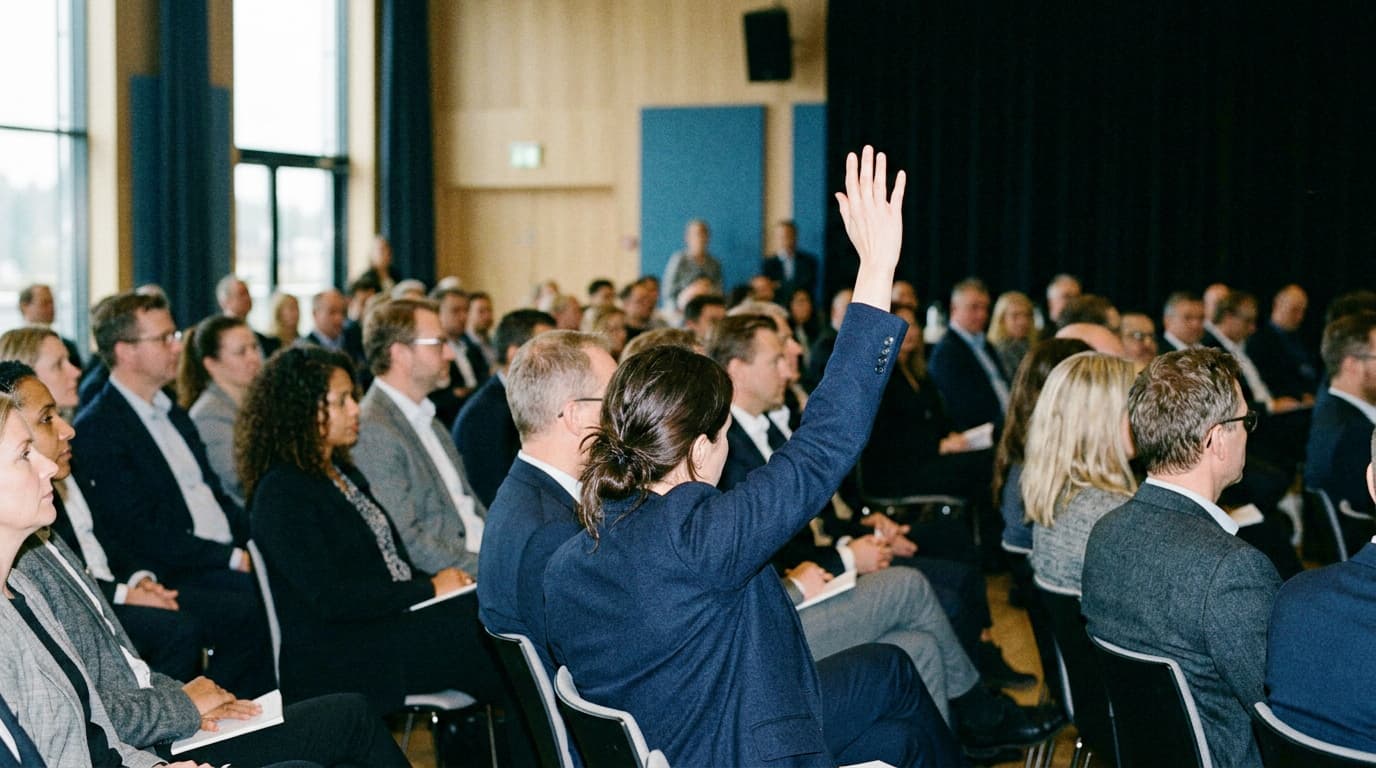
Some people think out loud. Others need quiet to think things through. And quiet doesn’t mean uninterested.
Jörgen talks about “Kalle the Owl”: the person who says nothing for ages, then comes up with the brilliant solution.
My job as chair is to get the whole orchestra playing together.
Try this: Build in 30–60 seconds of quiet thinking time before you go round the room. It helps both the “talkers” and the “thinkers”.
How to make things happen after the meeting
It’s the classic problem: you have a good meeting, then the working day takes over and everything’s forgotten.
Jörgen suggests a simple routine:
- Use the last 10 minutes to agree who does what, by when, and how you’ll follow up.
- Send a short summary straight afterwards (3–6 bullet points is plenty).
- Send a reminder a few days before the next meeting: How are you getting on with your action points?
AI in meeting planning: a great assistant, not an autopilot
AI can be a brilliant help with summaries and structure, but Jörgen warns against taking your hands off the wheel completely.
AI is a really good assistant… but it’s not always all that competent.
The best way to use AI: Write a first draft yourself, then use AI as a sounding board to check the timing and improve your meeting plan.
Where Confetti really comes into its own: AGMs and general meetings
Jörgen uses Confetti himself for AGMs and general meetings, where order, clarity and giving everyone a chance to have their say matter even more than usual.
Checklist: better meetings in 10 minutes
Want quick results? Run through this:
- Appoint an owner for your meeting culture (yes, at management level)
- Clear out recurring meetings: keep, change or cut?
- Plan: purpose, materials, attendees, desired outcome
- Try 45-minute meetings for two weeks
- Add roles: chair + timekeeper + remote voice
- Always finish with “who does what” + a short follow-up
Want meetings that lead somewhere?
With Confetti, you can set up AGMs, board meetings and other important gatherings your way.